 Communication
Chatwoot Hosting
Chatwoot is an open-source customer support platform. Manage conversations from live chat, email, social media, and WhatsApp in a single dashboard for your support team.
Support
Live-Chat
Helpdesk
1-Click Installation
GDPR compliant
Cancel monthly
🇩🇪
LocationStuttgart
🌱
100% Renewable EnergyGreen Hosting
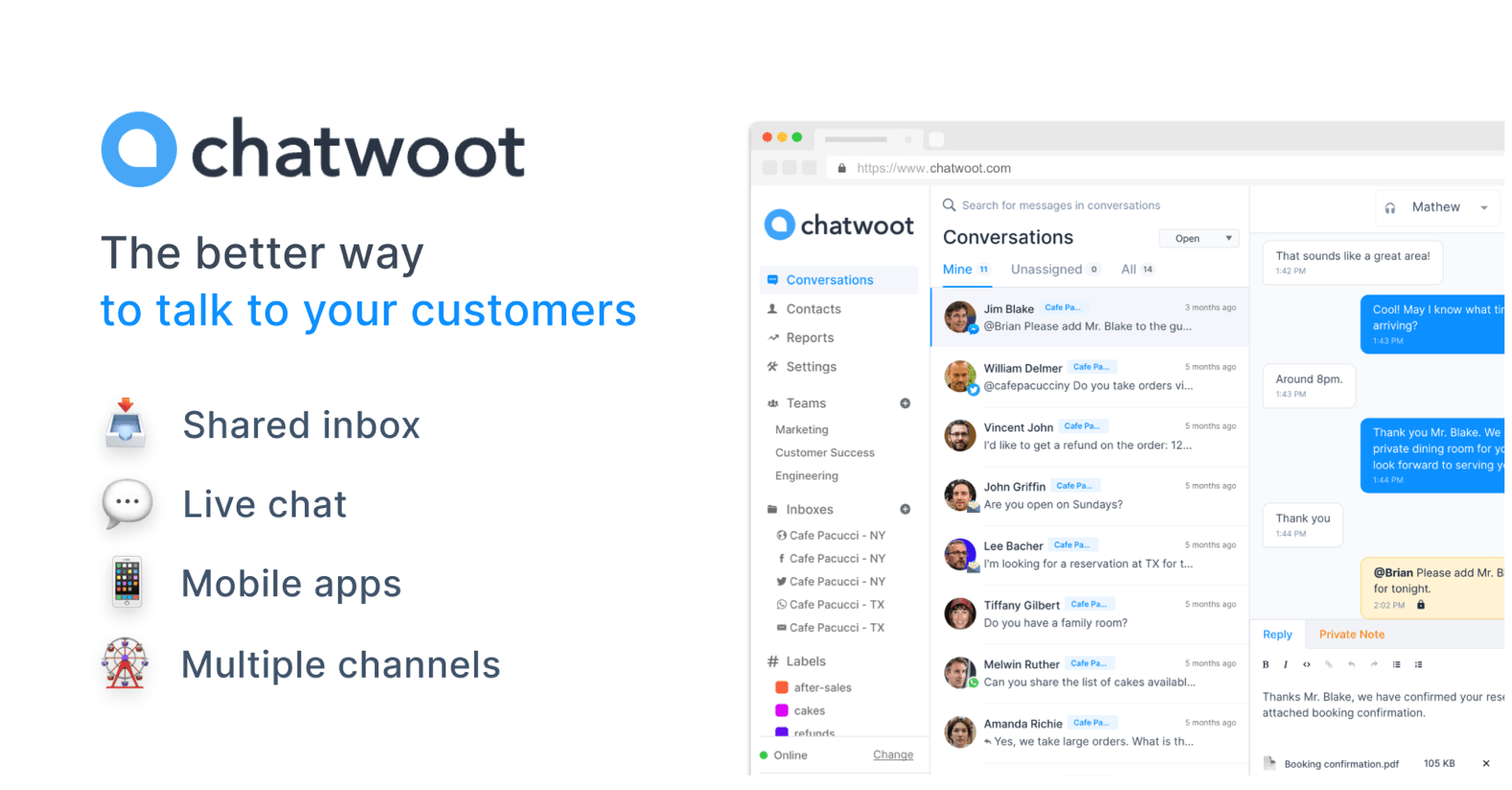
What is Chatwoot?
Chatwoot is an open-source customer support platform. Manage conversations from live chat, email, social media, and WhatsApp in a single dashboard for your support team.
Features & Benefits
Omnichannel inbox
Chatwoot on your own vServer gives you full control and flexibility.
Live chat widget
Chatwoot on your own vServer gives you full control and flexibility.
Chatbot integration
Chatwoot on your own vServer gives you full control and flexibility.
Team collaboration
Chatwoot on your own vServer gives you full control and flexibility.
Canned responses
Chatwoot on your own vServer gives you full control and flexibility.
Reports & analytics
Chatwoot on your own vServer gives you full control and flexibility.
3 Steps to Chatwoot
From ordering to running installation in just minutes
1
Order vServer
Choose a suitable vServer plan. For Chatwoot we recommend at least the XB1.2 (4 vCores, 8GB RAM). Your server is ready in 60 seconds.
2
Install Chatwoot with 1-Click
In the customer center, simply select Chatwoot as a template. The installation runs fully automatically.
3
Configure & Get Started
After installation, access Chatwoot directly through your browser. Set everything up to your liking.
Recommended vServer for Chatwoot
All plans with 1-click Chatwoot installation, root access and unlimited traffic
Frequently Asked Questions
Everything you need to know about Chatwoot hosting
Chatwoot is an open-source customer support platform. Manage conversations from live chat, email, social media, and WhatsApp in a single dashboard for your support team.
For Chatwoot we recommend at least the XB1.2 (4 vCores, 8GB RAM). This plan provides enough resources for smooth operation. For higher usage or more users, we recommend upgrading to a larger plan.
With our 1-click installation, Chatwoot is automatically set up on your vServer. After ordering, simply select Chatwoot as a template in the customer center. All dependencies are automatically installed and configured.
Yes, Chatwoot is open source and licensed under the MIT license. The software itself is completely free. You only pay for the vServer running Chatwoot – starting from just €2.95/month.
Yes! Chatwoot runs exclusively on your own vServer in our datacenter in Stuttgart. Your data never leaves Germany and is stored fully GDPR compliant. We operate our own infrastructure – no third-party providers, no external hardware.
Yes, upgrading to a larger vServer is possible at any time. Simply contact our support and we'll take care of it – without data loss and without interruption.
Discover more 1-click apps
Chatwoot is just one of many apps you can install with 1-click on your vServer.
View all apps →Our Promise
What sets us apart from other providers
Own Datacenter
We operate our entire infrastructure ourselves in Stuttgart – no resellers, no external hardware.
Cancel Monthly
No long contract terms. Cancel monthly – fair and flexible.
30-Day Money Back
Not satisfied? Get your money back within 30 days – no questions asked.
100% Germany
Your data never leaves Germany. GDPR compliant and under German law.
🌱 Sustainable since 2016
Green IT –
Green IT –
Hosting with Responsibility
Climate protection and our environment matter to us. That's why we operate our entire infrastructure exclusively with electricity from renewable energy sources. We even generate part of it ourselves with our own solar power plant directly at the datacenter.
100%
Renewable Energy